
How AeroBarrier works.
AeroBarrier is an automated, interior-applied process that seals the air leaks in an entire building at once, from gaps as thin as a human hair up to ½ inch wide, while measuring the result in real time.
Prepare
Designed openings such as HVAC registers, electrical boxes and plumbing penetrations are covered, along with finished horizontal surfaces. Walls and windows do not need covering.
Pressurize
A calibrated blower door pressurizes the building, so air is forced out through every crack, gap and penetration in the envelope.
Fog
Sprayers placed throughout the building mist a waterborne acrylic sealant. The escaping air carries the particles to the edges of each leak, where they accumulate across the opening until it closes. The sealant is designed to deposit in leaks, not on vertical surfaces.
Measure & certify
Envelope leakage is measured continuously during sealing, so a specific airtightness target can be set and reached. You receive a sealing certificate showing the leakage before and after.
Air out and resume work
The building is aired out for 30 minutes after sealing. Trades can return as soon as the equipment is removed.
Two stages of construction.
AeroBarrier can be installed after rough-in and before insulation, or after drywall is installed and before finishes. With an unvented attic or no attic, you can choose either stage; a vented attic means post-drywall. The install requirements explain what each stage needs.
Seals the exterior envelope
Installed after mechanical rough-in and immediately before insulation (or right after any spray foam). Requires an unvented, conditioned attic (or no attic) and fully sheathed exterior walls.
Seals the drywall air barrier
Installed after drywall is hung, taped and mudded and before any finishes. Required when the attic is vented, and also an option with an unvented attic or no attic. Well suited to complete remodels.
What is being sprayed.
AeroBarrier sealant is a waterborne acrylic that has long been used as a fluid-applied air barrier.
- AeroBarrier's X1 sealant is GREENGUARD Gold certified for low chemical emissions.
- Low VOC, with no ingredients from the ILFI Red List of building materials.
- Tested to ASTM standards and NFPA 285 for fire spread, smoke production, adhesion, antifungal properties and tensile strength.
- Withstood a simulated 50-year durability test in third-party lab testing with little or no loss of seal.
During application the space is not safe to breathe without protective equipment, so technicians entering the building wear PPE. After sealing is complete and the building has been aired out for 30 minutes, the area is safe to enter.
A typical installation.
Prep and sealing usually take two to three days on site, and other trades can keep working during prep. The sealing itself typically takes one to two hours. Very tight targets, such as Passive House, can take longer.
See case studies →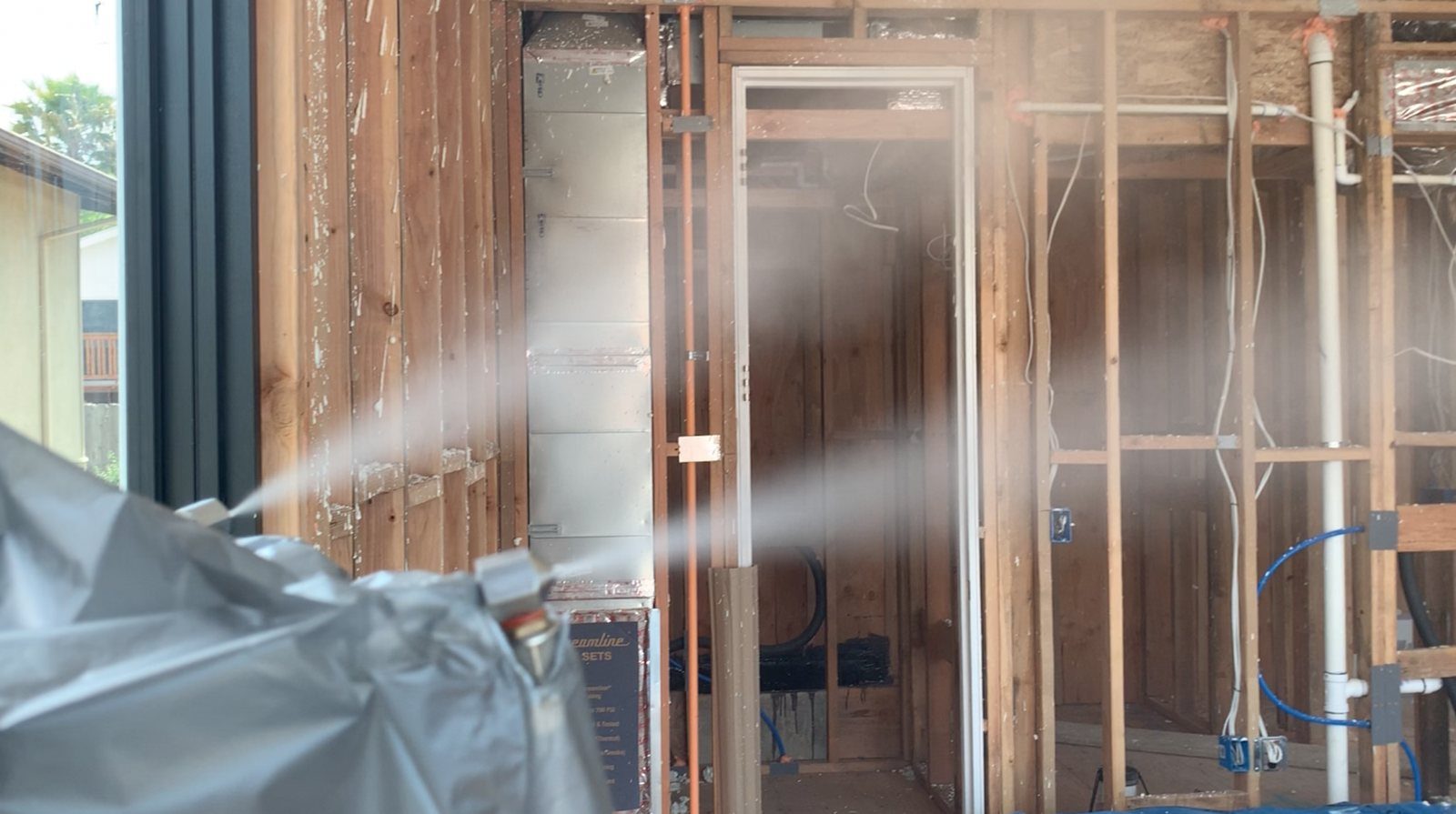
Request a proposal.
Provide the project's square footage, location and construction stage. We will respond with a written proposal presenting Good, Better and Best options.